About Stagefright
Rehearse until
it feels familiar,
and it goes better.
Whether it's a conference or a wedding speech, four steps help most:
- Press record
- Watch yourself back
- Review feedback
- Try again
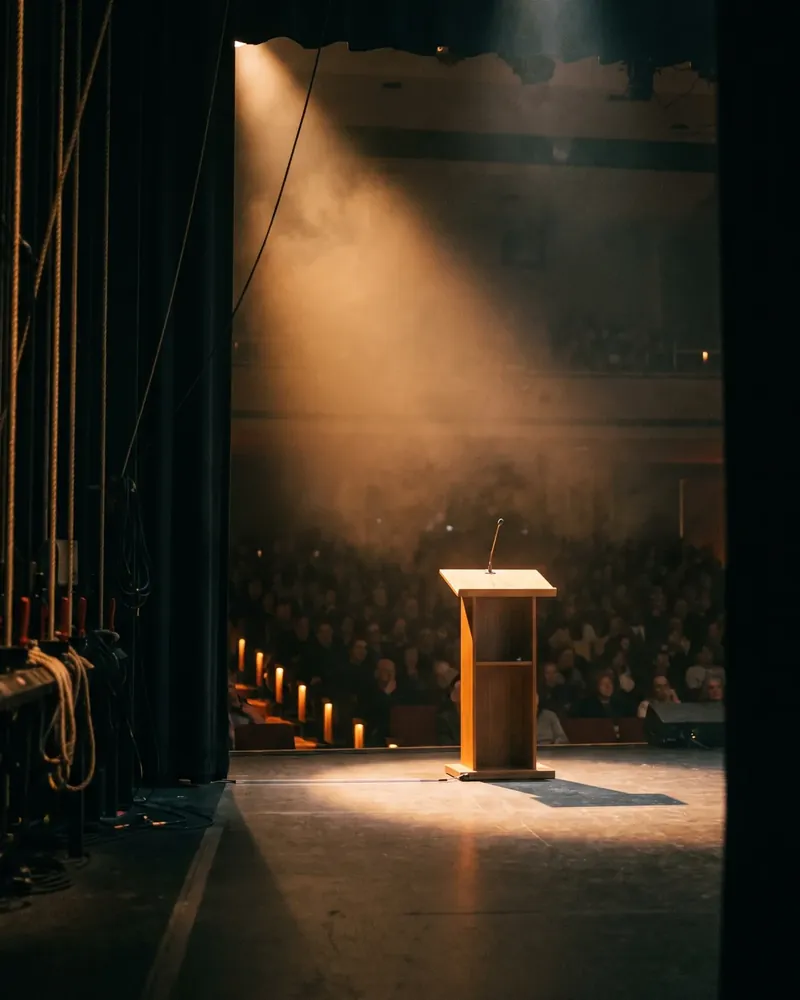

Why we built Stagefright
Storytelling is how we make friends, win people over and help others see what we see. It might be the most useful skill a person can have.
Public speaking is often where that skill is hardest to use. The pressure arrives, and the story you know so well comes out flat, rushed or not at all.
Stagefright is a place to practise until you can walk out there confidently.
What we believe
Nerves can stay. Rehearsal makes them familiar.
Picture the room. Hear your opening. Feel yourself begin. The more real it feels in rehearsal, the more familiar it feels on the day.
The record button creates useful pressure.
Recording yourself is one of the closest things to recreating the pressure of the day.
Watching yourself back comes first.
Watch it back and you notice all the things you’d never catch in the moment.
Feedback should lead to another attempt.
One clear thing to try, straight away while it is fresh, is what makes the next take feel different.
Thinking on your feet can be trained.
Talk for a minute on a topic you didn’t pick, and the next unplanned moment feels like one you’ve had before.
What the coach is for
Watching yourself back is hard to do alone.
Most of us cringe and look away. The coach watches it with you. It points at the moments worth rewinding, tells you what's already working, and gives you one thing to try next.
| Signal | First take | Fifth take |
|---|---|---|
| Pace | 172wpm, brisk | 141wpm, settled |
| Filler words | 11 | 3 |
| Pauses that land | 0 | 4 |
| Warmth | ||
| Vocal variety |
What your coach watches
Six things your coach checks every time you rehearse.
Your coach looks at the same six things on every run, so you can see which ones move from one take to the next.

Eyes, posture, gestures
Presence
Where you look, how you stand, and whether your hands help the point or fidget with it.
Eye contact Great · Hands Okay

Pace, pauses, energy
Vocal variety
How fast you go, where you stop, and whether the room can hear the big line coming.
146 words a minute · 3 pauses

Fewer ums and so's
Filler words
Every um, like and so counted, so you know which habit to drop first.
um ×2 · like ×2

Crisp, clear words
Clarity
Whether someone could repeat your main point after hearing it once.
79 · Clear

A clear thread that lands
Story
An opening people can step into and an ending that stays with them.
71 · Building

Coming across as you
Warmth
Whether you sound like yourself talking to people, or like someone reading out a script.
82 · Natural
The same six on every run, with the names and icons you see in your results. The figures above come from a sample report.
Try a free 60-second rehearsal
The first minute
Rehearse your first minuteNail the first minute and the audience is in the palm of your hand.
Nerves or excitement?
Same racing heart. Different label.
Nerves and excitement feel almost identical in the body. In a 2014 Harvard study, people who told themselves “I'm excited” before giving a speech were rated more persuasive and more confident than people who tried to calm down. So keep the feeling and call it excitement.
Alison Wood Brooks, Journal of Experimental Psychology: General, 2014

A Stagefright favourite
Start with the minute that matters most.
Nerves peak in the opening. Rehearse it until it feels familiar.
Who sees your rehearsal?
Your recording goes to Google Gemini to create your report, and our copy is deleted the moment the report is ready. Google never uses it to train its AI. There’s no account, the report lives only in your browser until you close it, and we keep no copy.
Read the privacy policy