Fear of public speaking (glossophobia): how to overcome it
What glossophobia is, why a fear of public speaking is so common and a step by step plan to overcome it over a few weeks of small, low-stakes practice.
8 min readFor anyone who has been avoiding speaking in front of people for years1 drill
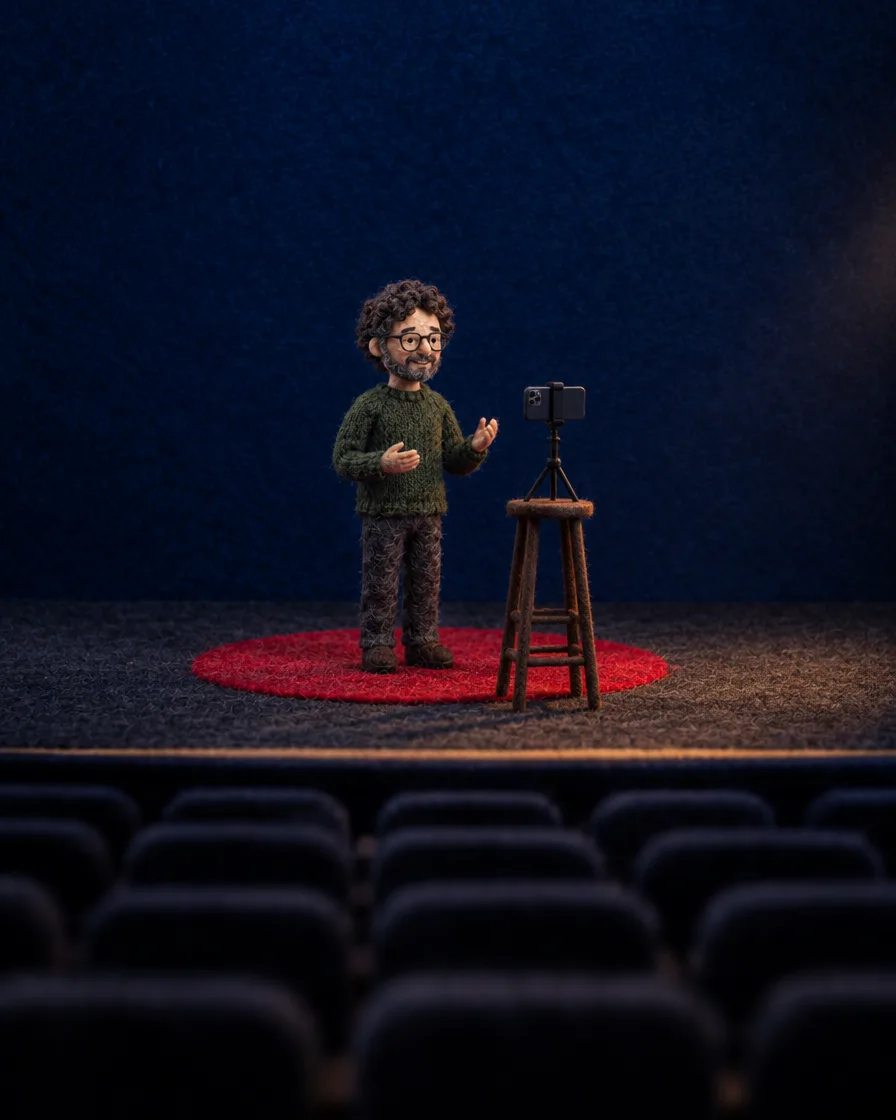
A fear of public speaking rarely shows up only on the day. It's the stomach drop when your manager asks who wants to present, or the meeting where you had something useful to say and kept quiet. For some people it has shaped their choices for years.
If that sounds like you, you're in large company. A fear of public speaking is usually described as one of the most common fears people have, and it responds well to practice. This guide explains what it is, why your body reacts the way it does and how to get over it gradually, over a few weeks of short practice.
What is glossophobia?
Glossophobia is the name for a fear of public speaking. It comes from the Greek words for tongue and fear. You'll see the word in articles and search results, but most people never hear a doctor use it, and you don't need a label to start working on the fear.
It covers everything from mild dread before a work update to the kind of fear that makes someone turn down a promotion because the new role involves presenting. What links them is anticipation. The worry starts long before you speak, sometimes days or weeks before, and it often carries on afterwards as you replay what you said.
That's the main difference from stage fright. Stage fright is the spike of nerves around the moment itself, from waiting to be called up to the end of your first minute. A fear of public speaking is the longer pattern of dread and avoidance around it. Most people have some of both, and the work in this guide helps with each.
Why is fear of public speaking so common?
Speaking to a group puts you in a position people are wired to care about. Everyone is looking at you, you can't easily read what they think and it feels as though your standing with them is on the line. For a social animal that registers as a risk, even when the stakes are a ten-minute team update.
A few things make it worse:
- Not much practice. Most adults speak to a group a handful of times a year. Every time feels like the first time, so the body never learns that it goes fine.
- Avoidance. Each time you dodge a talk, you feel relief. That relief teaches your brain that speaking was dangerous and avoiding it kept you safe, so the fear grows.
- One bad memory. Many people can point to a single moment, often at school, when they went red, lost their words or were laughed at. The memory does a lot of the work years later.
- Overestimating what shows. Psychologists call it the illusion of transparency. Nervous speakers believe their nerves are far more visible than they are. Your shaking hands feel obvious to you and often go unnoticed by the room.
What fear of public speaking feels like in your body
When your brain decides a situation is a threat, it sets off the stress response, often called fight or flight. Adrenaline and other stress hormones are released to get you ready to act fast. It's useful when you need to run, and much less so when you're standing in a meeting room.
Each symptom has a reason behind it:
- A racing heart pumps more blood to your muscles.
- Fast, shallow breathing brings in more oxygen, and can leave you short of breath mid-sentence.
- A dry mouth and butterflies happen because digestion is put on hold.
- Shaking hands or a shaky voice come from muscles primed and tense with nowhere to go. Our guide to a voice shaking when you're nervous covers the voice side.
- Going blank happens because stress hormones make it harder to pull words and ideas out of memory. There's more on that in what to do when your mind goes blank.
- Blushing and sweating are part of the same surge.
These feelings are your body getting ready to perform. None of them means the talk is going badly.
How to overcome fear of public speaking, step by step
The approach that works for most people is the same one therapists use for many fears: face it in small doses, often, and build up. Each time you speak and nothing terrible happens, your body learns a little more that this situation is safe.
Build up gradually
Write down seven to ten speaking situations, from the least to the most frightening. Yours might look something like this:
- Talking out loud on your own for one minute
- Recording yourself for one minute and watching it back
- Saying a short piece to one friend or partner
- Asking one question in a meeting
- Giving a two-minute update to your team
- Speaking at a small event or a club like Toastmasters, a non-profit network of public speaking clubs
- The talk you've been dreading
Start at the bottom and stay on a step until it feels dull. Then move up one. If a step feels too big, add a smaller one in between. Feeling nervous on each new step is normal and expected. You're looking for the point where the nerves come and then settle, and that only happens if you stay in the situation long enough for them to do so.
Rehearse out loud, on your feet
Reading your notes silently feels like preparation, but it leaves out the parts that frighten you: your voice in the room, your body standing up and the feeling of being watched. Say it out loud, on your feet, more than once. Familiarity is one of the strongest things you have against fear, and you only get it from saying the words. Our guide on how to practise a speech has a full routine.
Call it excitement
Nerves and excitement feel almost identical in the body. Both raise your heart rate and both give you a jolt of energy. Telling yourself to calm down rarely works, because you're asking your body to do something it can't do on command. Some research suggests that telling yourself "I'm excited" helps more, because it keeps the energy and changes what it means. Try saying it to yourself before each step on your list.
Keep the reps small and frequent
One minute of speaking a day does more than one long rehearsal a month. Short reps are easy to start, so you actually do them, and frequent ones teach your body faster. A minute is also long enough to notice your habits, like rushing, filler words or trailing off at the end of sentences.
Stagefright gives you a new topic every day for a 60-second rehearsal, recorded in your browser on your phone or computer. The coach looks at your delivery, from pace and pauses to filler words and how warm and clear you come across, and gives you one thing to try next time. Your recordings stay private.
Practise this now
Start with one minute.
Record a minute, watch it back and get one thing to try next.
Rehearse your first minuteHow long does it take to get over a fear of public speaking?
It depends on how strong the fear is and how often you practise, so nobody can give you an exact number. As a rough guide, many people notice a real difference after a few weeks of short, regular practice, and the steps near the top of their list start to feel possible within a couple of months.
For most people the fear gets smaller over time, though it rarely vanishes completely. Plenty of experienced speakers still feel a flutter before they start. They say yes to the presentation and speak up in the meeting anyway, and that's a realistic goal.
Expect wobbles too. A bad week or a talk that goes badly can make the fear feel as big as ever, but the progress you made is still there. Go back one step on your list, do a few easy reps and carry on.
Is fear of public speaking a phobia?
Doctors don't usually diagnose glossophobia on its own. For most people, a fear of public speaking is a normal fear that has grown through avoidance and lack of practice, and the steps above are enough.
When the fear is intense, lasts for months and gets in the way of work, study or daily life, it can be part of social anxiety disorder. Social anxiety can be limited to performance situations like speaking or presenting, or it can spread to things like eating in front of others or meeting new people. Either way it's very treatable.
When it's more than nerves
Talk to your GP if the fear of public speaking is stopping you from doing things you need to do, if you're losing sleep over it days before, or if you're having panic attacks. In England you can also refer yourself to NHS Talking Therapies, which offers cognitive behavioural therapy (CBT) for anxiety, including social anxiety. In Scotland, Wales and Northern Ireland, your GP is the place to start. CBT uses the same idea as the step by step list above, with a trained therapist to guide you through it.
For everyone else, the place to start is the bottom of your list. Talk out loud for one minute today and notice how it feels.