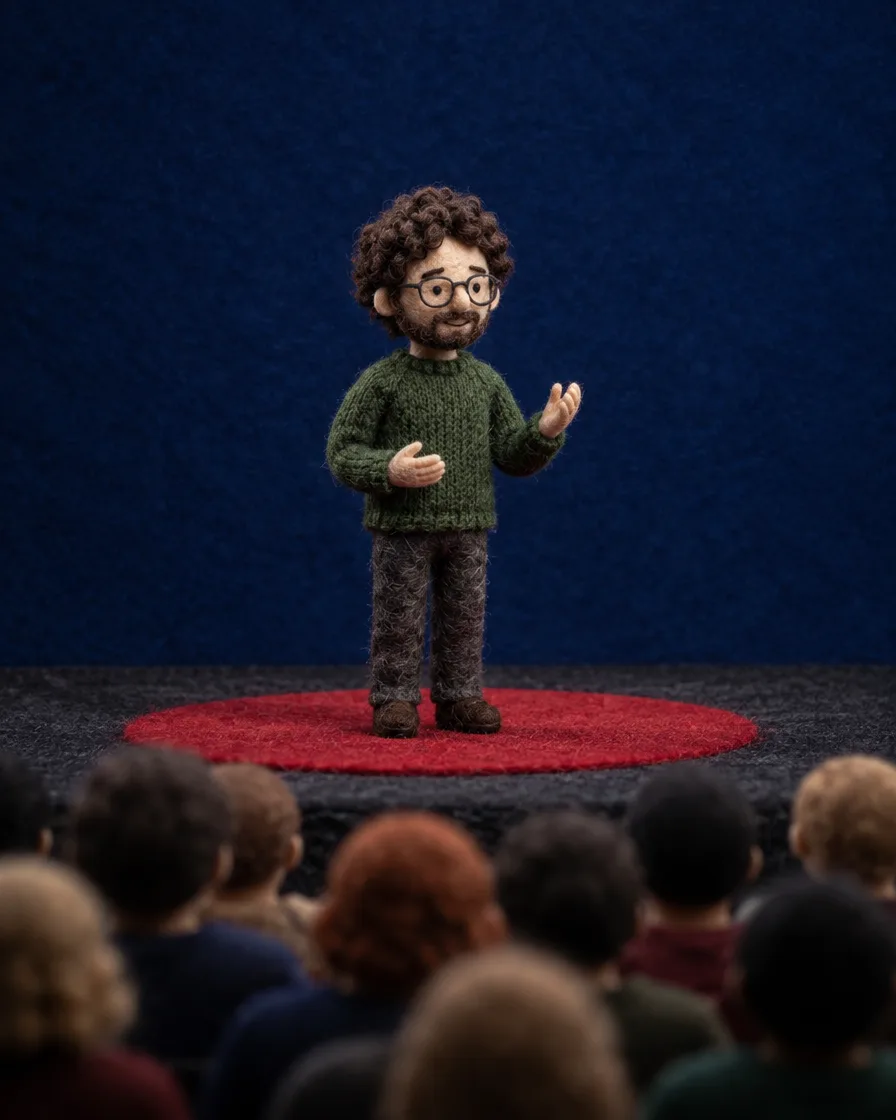
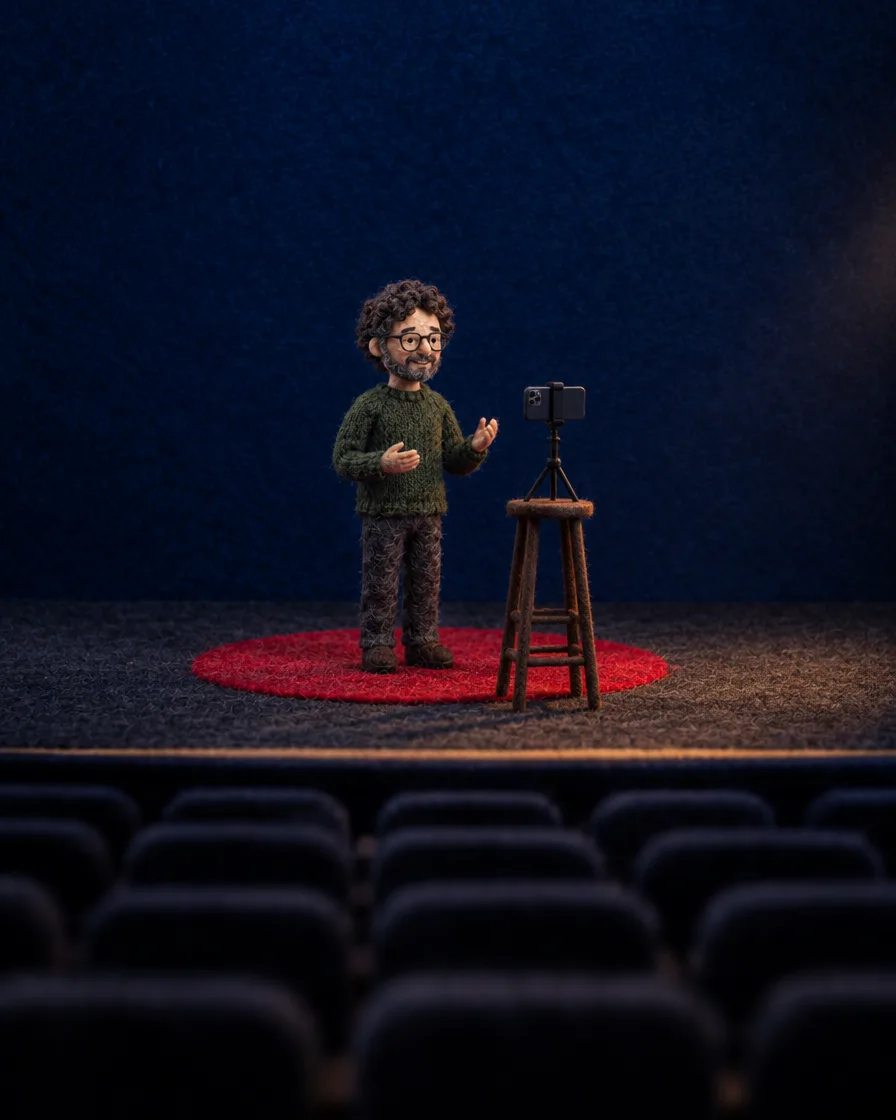
What to do with your hands when presenting
What to do with your hands when presenting: a natural resting position, gestures that help, habits that distract and how to practise on video.
5 min readFor anyone who never knows where to put their hands in a talk1 drill

Most people never think about their hands until they stand up to speak. Then the hands suddenly feel enormous and you can't remember what you normally do with them. They go into your pockets, then behind your back, then out again. Not knowing what to do with your hands when presenting is one of the most common worries nervous speakers have.
It's simpler than it feels. You need one comfortable place to rest them, a few gestures that support your words and a sense of which habits pull attention away. This guide covers all three, plus what to do when you're sitting down, on a video call or holding notes or a microphone.
Where should you put your hands when presenting?
Start with a neutral resting position you can always come back to. There are two that work for most people.
The first is arms hanging loosely by your sides. It feels strange from the inside, as if you're standing to attention, but to an audience it looks relaxed and confident. The second is hands lightly together in front of you at about waist height, fingertips touching or one hand resting in the other. Keep the touch loose. A tight grip shows tension and makes it hard to gesture.
Stand with your feet about hip-width apart and your shoulders down. From there, every gesture starts from rest and goes back to it, so you never have to wonder where your hands should be in between.
Gestures that help when you're presenting
Good gestures make your words easier to follow. They give the audience something to see that matches what they hear.
Keep most gestures in the box between your waist and your shoulders, roughly as wide as your body or a little wider. Gestures below the waist get lost, and ones above the shoulders look dramatic. In a large room, make them bigger so they carry. In a small meeting, keep them smaller.
Let each gesture land on the word it belongs to, hold it for a moment and then return to rest. Don't script particular gestures for particular lines, because planned gestures tend to arrive a beat late and look rehearsed. Rehearse the resting position, and let the gestures come from what you're saying.
Hand habits that distract
Hands distract when they move for no reason. These are the habits audiences notice most.
- Hands in pockets. One hand in a pocket for a moment in a relaxed talk is fine. Both hands, or jingling keys and coins, looks closed off. Empty your pockets before you start.
- Clasping and wringing. Gripping your hands together in front or behind your back looks tense and stops you gesturing at all.
- Fiddling with a pen or clicker. Clicking a pen, twirling it or pulling the lid on and off draws every eye in the room. Put the pen down. Hold a clicker loosely in one hand and leave the other free.
- Crossed arms. You may just be cold, but to an audience crossed arms look defensive.
- Touching your face, hair or sleeves. These are self-soothing habits that tend to appear when you're nervous, and they're hard to spot until you see a recording.
Hands when sitting down or on a video call
Seated at a table
In a meeting or an interview, rest your hands on the table where people can see them, with your forearms on the edge. Hands hidden under the table can make you seem guarded. Gesture from that position, keeping the movements smaller than you would standing, and let your hands settle back on the table between points.
On a video call
Sit far enough back from the camera that the frame shows your head, shoulders and the top of your chest, with room for your hands to come into view when you gesture. Anything close to the lens looks huge, so keep gestures a little lower and slower than in person, in front of your chest. Keep your hands away from your face. Stagefright's Presence score looks at your hands on video, alongside your eye contact and posture, so a short recorded rehearsal shows you what your hands are doing.
Hands when holding notes or a microphone
If you use notes, use small cards rather than A4 sheets. Paper shows every tremble, and shaking hands are one of the most common signs of stage fright. Hold the cards in one hand at about waist height and keep the other hand free to gesture. At a lectern, rest your notes on it and avoid gripping the edges.
With a handheld microphone, hold it just below your chin, angled towards your mouth, and keep it there as you turn your head. Gesture with your other hand. This matters most at weddings, when you may have the microphone in one hand and your notes in the other. Practise with something the same size so it isn't new on the day.
If your hands shake however you hold things, our guide to calming your nerves before a presentation covers what to do in the hour before.
How to practise using your hands
The quickest way to see your habits is to record yourself on video and watch it back with the sound off. Without your words, you see only what your body is saying, and habits like fiddling or touching your face become obvious. Frame the shot so it shows you from head to waist, and stand as you would on the day.
Practise this now
See what your hands are doing.
Record a minute, watch it back and get one thing to try next.
Rehearse your first minuteDo this a few times over a week and the resting position starts to feel normal. For the rest of your delivery, from your voice to your opening line, see our public speaking tips.